Charting Travel Fatigue Effects on Competitor Output Across Racing Circuits and Team Events
Written by Elena Coleman · Aug 26, 2026
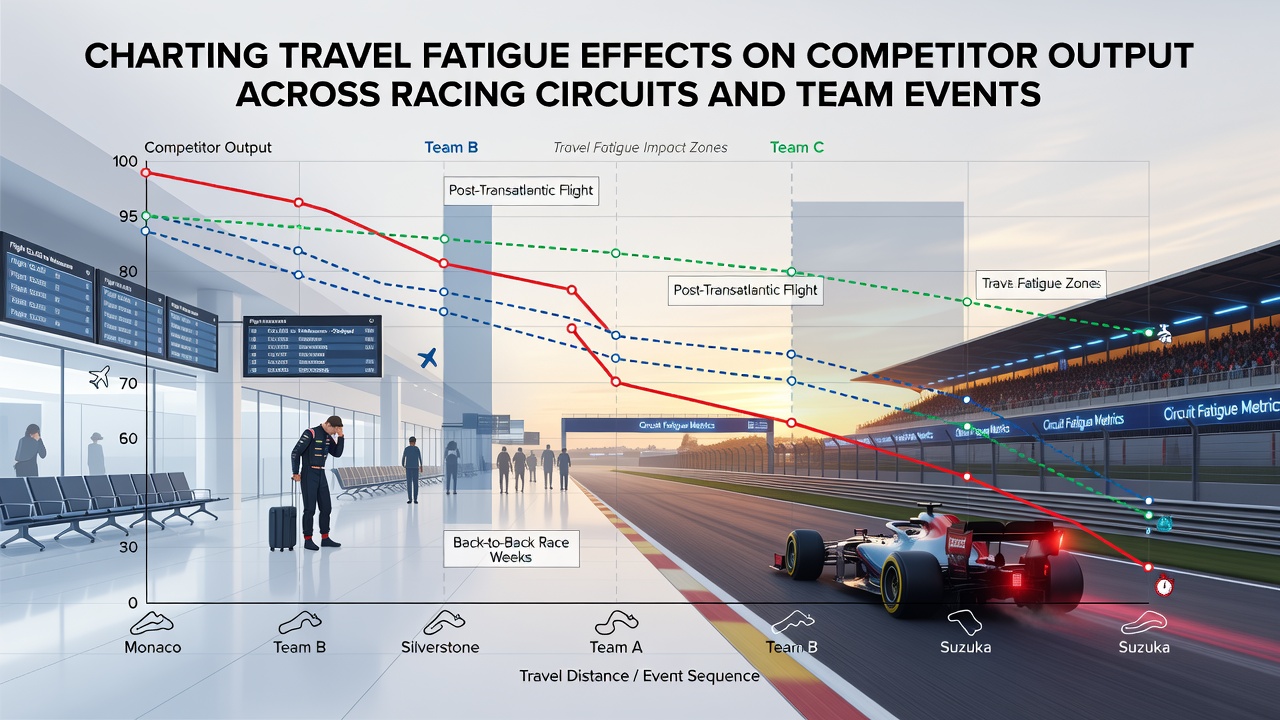
Charting Travel Fatigue Effects on Competitor Output Across Racing Circuits and Team Events
Travel fatigue appears in multiple racing formats where competitors cross time zones and face disrupted sleep patterns before events, and data from motorsport series along with team-based competitions shows measurable drops in reaction times and decision accuracy when recovery windows shrink. Researchers tracking Formula 1 and endurance racing squads have logged consistent patterns since the expansion of global calendars, while similar metrics emerge in cycling tours and relay-style team events that require repeated flights between venues.
Patterns Observed in Circuit-Based Racing
Long-haul flights preceding European and Asian rounds in 2025 produced slower qualifying lap averages for drivers who logged more than eight hours in the air, according to telemetry shared by several constructor teams; the same datasets revealed elevated heart-rate variability during practice sessions that followed overnight arrivals. In August 2026 the calendar placed two North American events within ten days of an Australian round, prompting crews to adjust acclimatization protocols after earlier studies indicated that eastbound travel across eight time zones correlates with a 3 to 5 percent reduction in cornering precision during the first two days on site.
Engineers monitoring tire wear and fuel-strategy calls noted that radio communication errors increased on Fridays following transcontinental journeys, yet those same teams recorded stabilization once drivers completed at least one full night of sleep aligned with local time. Observers note that shorter domestic hops within the United States or within Europe produce smaller statistical effects, although cumulative fatigue across a three-week triple-header still registers in post-session debriefs.
Team Events and Cross-Venue Travel Loads
Professional cycling squads and basketball conferences that contest back-to-back away fixtures show parallel declines in output when travel exceeds six hours between matches. GPS tracking from the 2025-2026 seasons indicates that players covering more than 4,000 kilometers in a single week register reduced sprint distances in the opening quarter of subsequent games, while passing-completion percentages dip by roughly two points until circadian rhythms realign. One multi-year project coordinated across Canadian and Australian institutes found that teams employing structured light-exposure schedules during flights maintained closer-to-baseline reaction metrics than squads relying on unstructured rest alone.
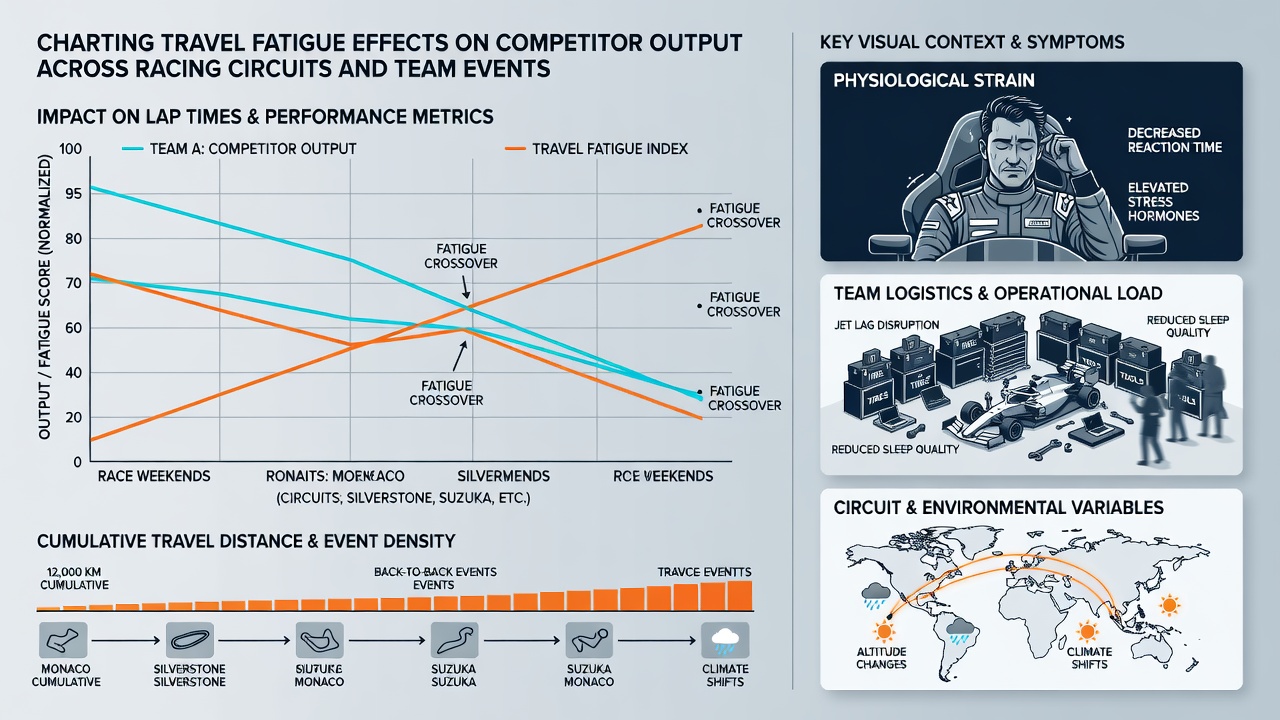
Relay swimmers and rowing crews competing in continental championships encounter comparable constraints when events rotate through venues separated by several time zones; performance logs compiled by national federations show that crews arriving less than 48 hours before heats post slower split times in the opening rounds, although the gap narrows once the schedule allows two full nights of local sleep. Data collected from European club competitions further illustrates that rail travel within the same time zone produces negligible shifts in output compared with air travel across multiple zones.
Measurement Approaches and Recovery Variables
Organizations such as the Australian Institute of Sport have published protocols that combine actigraphy, cognitive-testing apps, and on-site timing gates to quantify how travel distance, direction, and arrival timing interact with individual chronotypes. Their findings indicate that late chronotypes experience greater slowdowns after westward flights, whereas early chronotypes show larger deficits after eastward crossings, patterns that racing teams now incorporate when assigning driver rotations. Similar frameworks appear in reports issued by the Canadian Sport Institute, where staff track hydration markers and neuromuscular readiness to predict when output is likely to rebound.
Medical staff attached to endurance-racing entries emphasize that cabin pressure, reduced hydration, and limited movement during flights compound the circadian challenge; they therefore schedule in-flight mobility routines and targeted fluid intake to blunt the drop-off recorded in earlier telemetry. Across both circuit and team settings, the interval between arrival and first competitive session remains the strongest predictor of normalized performance, with data sets consistently showing that 72 hours or more of on-site time largely offsets measurable fatigue effects.
Conclusion
Longitudinal records from racing circuits and multi-team competitions demonstrate that travel fatigue registers as a quantifiable variable in competitor output, yet structured recovery windows and light-management strategies can narrow the performance gap. Continued monitoring through the 2026 season and beyond will supply additional data points that refine these models for teams operating across expanding global schedules.