Dissecting Altitude Adjustments and Their Bearing on Ball Flight Dynamics in Open-Field Competitions
Written by Quinn Hughes · Sep 24, 2026
Dissecting Altitude Adjustments and Their Bearing on Ball Flight Dynamics in Open-Field Competitions
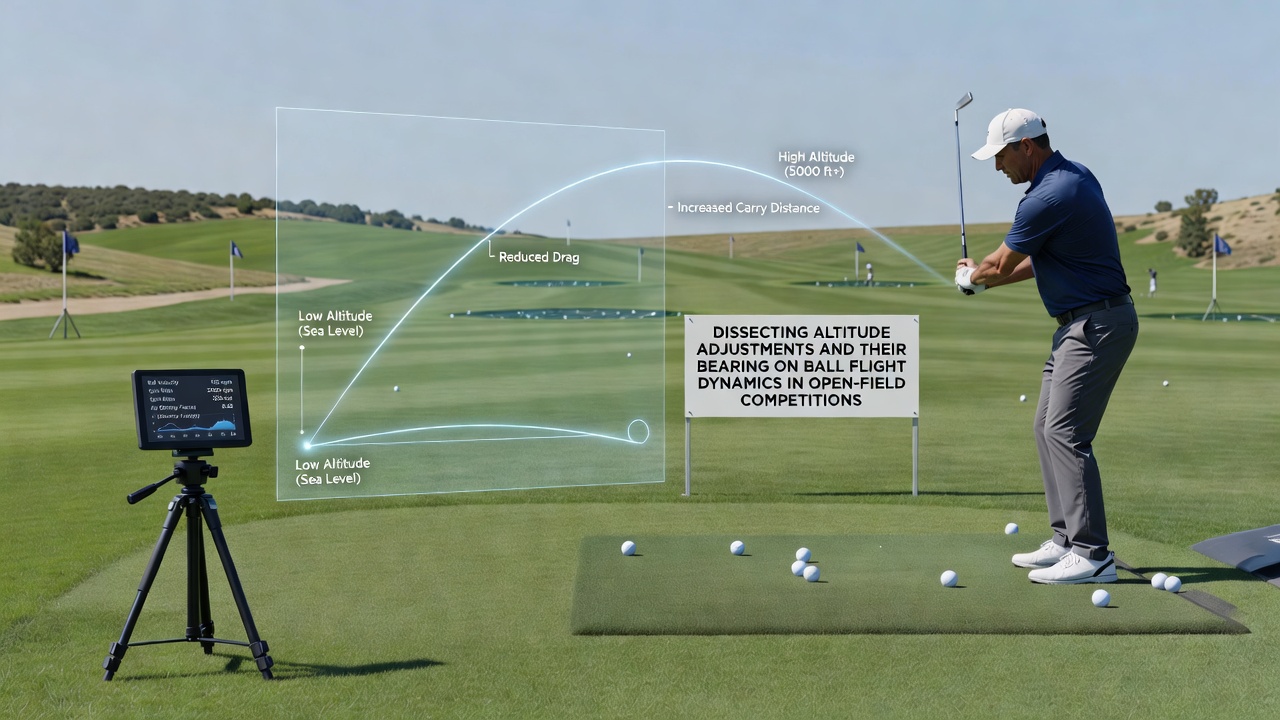
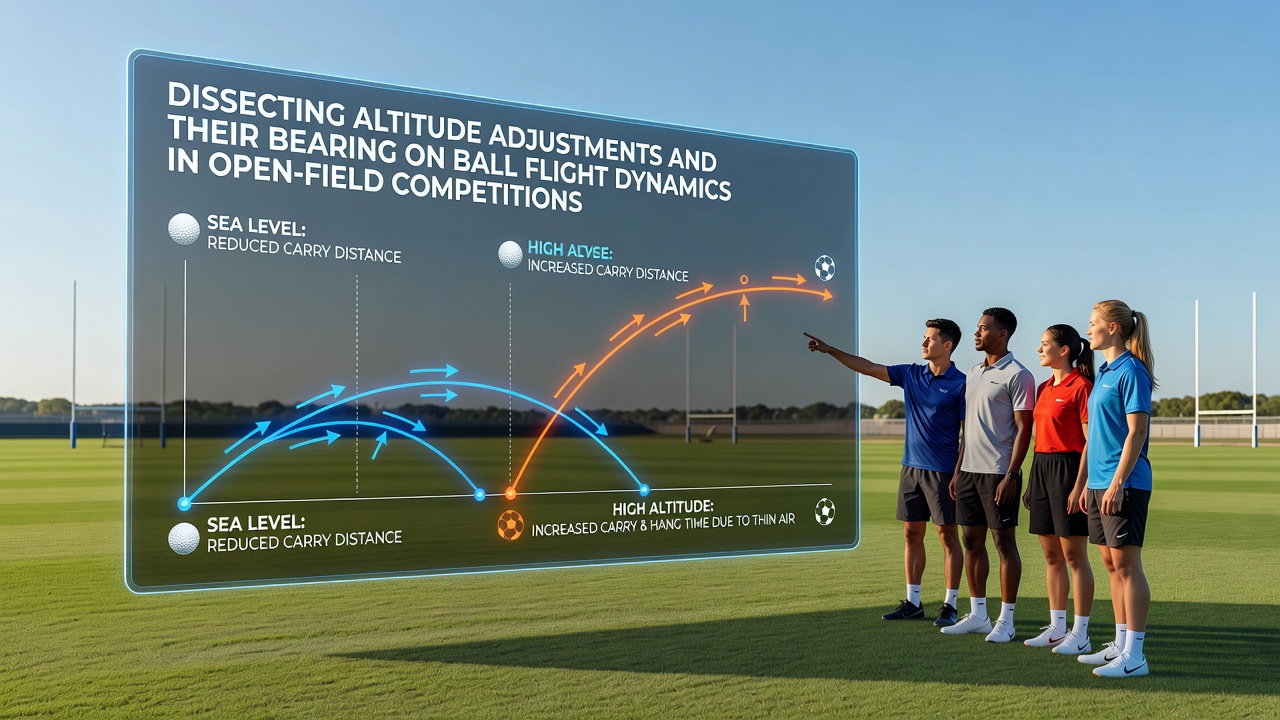
Altitude changes alter air density in measurable ways that directly influence how balls travel through open fields, and researchers have documented these effects across multiple sports through controlled experiments and field data. Air thins as elevation rises, which reduces drag forces while also diminishing lift generated by spin, and athletes in golf, baseball, and soccer must account for these shifts when competing at venues above sea level. Data collected by meteorological agencies and sports science teams show that a ball can travel 5 to 10 percent farther at 5,000 feet compared with sea-level conditions, while the trajectory flattens and the time aloft shortens because reduced air resistance lets the projectile maintain velocity longer.
Physics of Air Density and Ball Trajectory
Atmospheric pressure drops steadily with height, and each 1,000-foot gain in elevation lowers air density by roughly 3 percent according to standard atmospheric models used by aviation and sports researchers alike. This lower density means fewer molecules collide with the ball surface, which cuts both drag and the Magnus effect that produces curving flight paths. Engineers at institutions in Canada and Australia have modeled these variables using wind-tunnel tests that replicate real-game spin rates and launch angles, revealing consistent patterns where a soccer ball struck at 60 miles per hour travels an extra 4 to 6 yards at 3,000 feet versus sea level. Baseball researchers tracking major-league data have noted similar gains in home-run distances at high-elevation parks, with outfielders adjusting positioning by several steps deeper to compensate for the extended carry.
Sport-Specific Responses to Elevation
Golfers competing in mountain tournaments routinely select clubs with less loft because the reduced drag allows a 7-iron to perform closer to a 6-iron distance at sea level, and caddies maintain detailed yardage books adjusted for each venue's elevation. In soccer, teams training at altitude before matches at lower elevations report that passes arrive with less dip and greater speed, prompting adjustments in defensive spacing and goalkeeper positioning. Baseball organizations have compiled decades of statistics showing that fly balls carry 8 to 12 percent farther in stadiums located above 4,000 feet, leading coaches to emphasize line-drive contact over lofted swings during pre-season camps at those sites. Observers note that cricket bowlers and batters face parallel challenges when touring highland grounds, although the sport's seam movement and swing dynamics respond differently to the same density changes.
Measurement Tools and Data Collection
Modern tracking systems such as Doppler radar and high-speed cameras capture launch speed, spin rate, and landing coordinates with millimeter precision, allowing analysts to isolate altitude as an independent variable. Studies conducted by European sports institutes have compared identical shots taken at multiple elevations on the same day using portable launch monitors, confirming that total distance increases linearly with height while side spin produces wider dispersion because the stabilizing effect of air diminishes. In September 2026 several international federations plan synchronized testing sessions at venues ranging from coastal fields to 6,000-foot plateaus to update existing performance databases ahead of major competitions. These efforts build on earlier work by research groups in South Africa and New Zealand that established baseline correction tables now used by equipment manufacturers when designing balls for regional markets.
Athlete and Equipment Adaptations
Players adapt through repeated exposure and data-driven practice rather than intuition alone, and many squads now incorporate altitude chambers or travel protocols that accelerate acclimatization. Equipment choices evolve as well, with manufacturers offering balls that feature altered dimple patterns or internal pressure ratings calibrated for specific elevation bands. Golf ball suppliers publish charts showing compression and flight differences across a 2,000-foot range, while baseball teams experiment with grip modifications to restore control when seams catch less air. Training regimens include progressive exposure to thinner air, allowing muscle memory to recalibrate swing paths and release points without relying solely on verbal instruction from coaches.
Case Examples from Recent Seasons
One study tracked a professional golf event held at successive elevations and recorded average driving distances that rose from 285 yards at sea level to 302 yards at 4,200 feet, while approach-shot dispersion widened by 12 percent because reduced lift made stopping shots on firm greens more difficult. Baseball statisticians reviewing five seasons of data from a high-plains stadium found that outfield assists dropped 9 percent because fly balls carried farther and hung longer in the thinner atmosphere. Soccer analysts examining matches in Andean venues noted that teams playing their first game after descending from altitude recorded fewer successful long passes until they adjusted release angles and reduced backspin. These patterns repeat across disciplines whenever open-field competitions move between elevation zones, and governing bodies maintain updated environmental guidelines that teams reference during scheduling.
Conclusion
Altitude exerts a quantifiable influence on ball flight that athletes, coaches, and equipment designers address through systematic measurement and targeted preparation. Continued data collection from radar systems and wind-tunnel facilities supplies the objective foundation for these adjustments, and upcoming synchronized testing in September 2026 will refine existing models further. Organizations across multiple continents continue to share findings that help competitors prepare accurately regardless of venue elevation.