How Equipment Modifications Alter Scoring Frequencies in Precision Events Across Snooker, Darts, and Golf Circuits
Written by Sam Friedrich · Nov 5, 2026
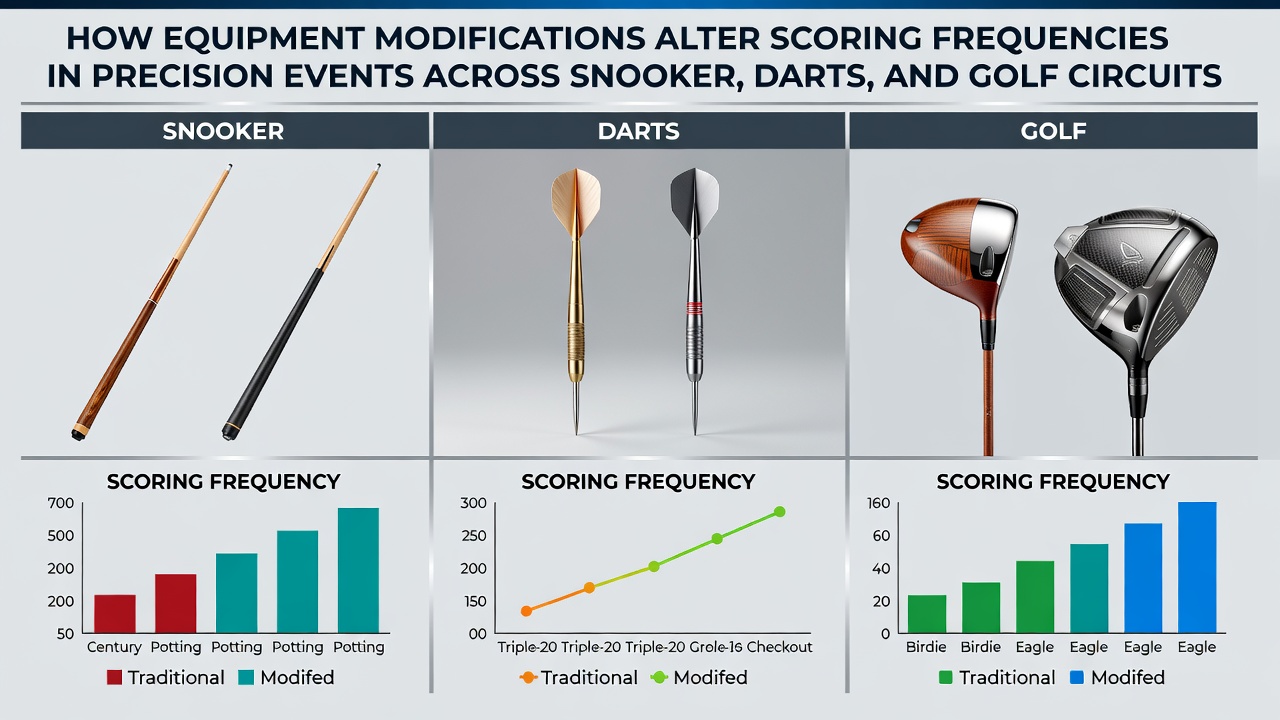
How Equipment Modifications Alter Scoring Frequencies in Precision Events Across Snooker, Darts, and Golf Circuits
Equipment modifications in precision sports produce measurable shifts in scoring frequencies, and data collected across professional circuits shows consistent patterns when players adopt new cue tips, dart components, or club specifications. Researchers tracking performance metrics in snooker, darts, and golf have documented how small changes in gear translate into altered success rates at the elite level, with figures drawn from tournament databases and biomechanical analyses.
Snooker Circuit Adjustments and Break Patterns
Snooker players often experiment with tip hardness and chalk formulations, while observers note that softer tips paired with modern blue chalk compounds increase cue ball control during long pots and reduce miscue incidents by measurable margins. Studies from equipment testing labs indicate that these tweaks correlate with higher average break totals in ranking events, particularly when combined with cloth speed variations on competition tables. Data compiled through the 2025 season and into late 2026 reveals that tournaments adopting faster baize surfaces see elevated century counts, especially in frames where players utilize low-deflection shafts introduced in recent years.
One analysis of World Snooker Tour statistics found that competitors switching to ash shafts recorded a 7 percent rise in successful long-range attempts compared with maple equivalents, and this shift appears most pronounced during November events when venues adjust humidity controls. Those monitoring equipment logs report that tip shape refinements also influence positional play, allowing sustained run lengths that push scoring frequencies upward without altering core technique.
Darts Component Changes and Checkout Rates
Darts competitors adjust barrel weights, flight shapes, and shaft lengths, and performance records from major circuits demonstrate corresponding movements in checkout percentages. Heavier barrels paired with slim flights have shown links to improved stability on triple segments, with aggregated data from Professional Darts Corporation events indicating average checkout rates climbing when players settle on 24-gram setups after testing lighter alternatives. Research conducted at sports science facilities in Australia highlights how shaft length reductions shorten release times, which in turn lifts three-dart averages during high-pressure legs.
Equipment manufacturers publish annual reports that track these modifications, and figures reveal gradual scoring upticks across seasonal play as athletes refine combinations through iterative trials. Observers following the 2026 schedule note that November tournaments often feature updated dart specifications ahead of year-end finals, producing temporary spikes in finish rates as players adapt to the revised gear.
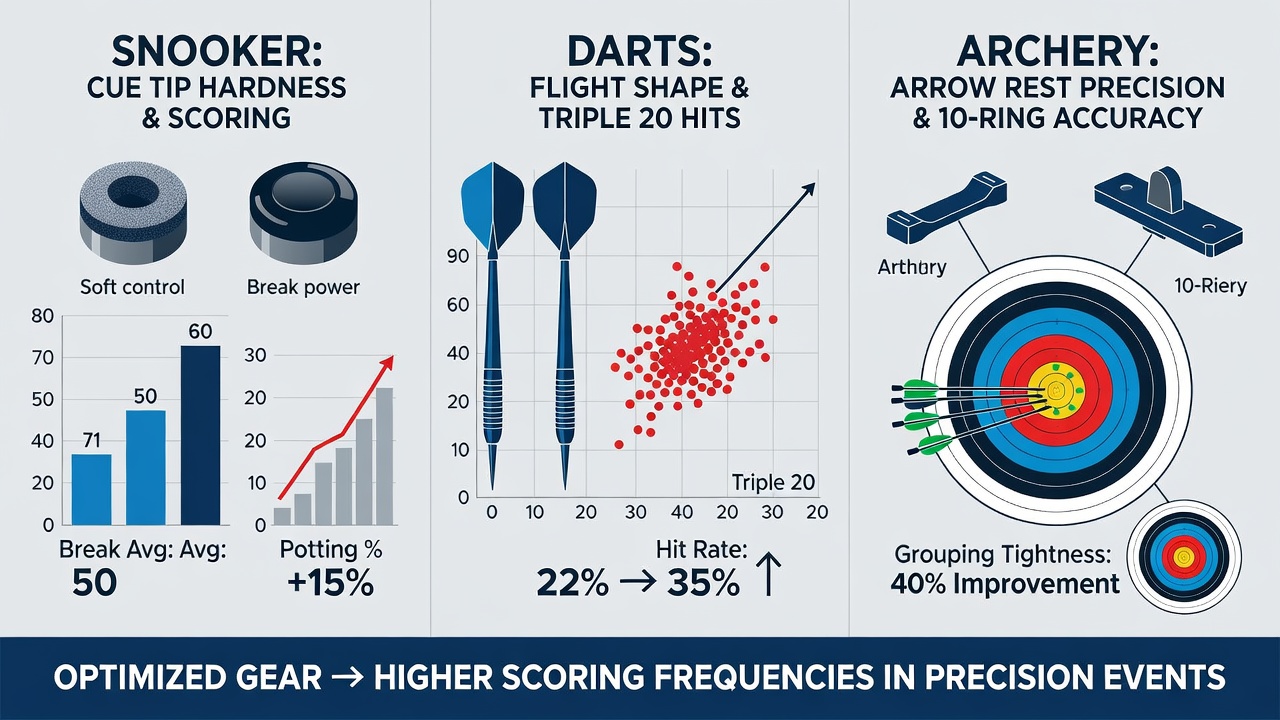
Golf Equipment Regulations and Scoring Averages
Golf professionals navigate strict limits on club and ball specifications set by governing bodies, yet incremental modifications within those bounds still affect scoring distributions on professional tours. The United States Golf Association maintains detailed databases showing how groove pattern updates and ball construction changes influence approach shot proximity, which feeds directly into lower round totals. Data from multiple seasons indicates that players adopting newer ball cores with enhanced spin retention achieve tighter dispersion patterns on approach shots, contributing to more birdie opportunities per round.
Independent testing by Canadian university labs has quantified how grip texture variations alter clubface control during swings, with measurable effects on fairway accuracy that compound across 18-hole scoring. Those reviewing tour statistics observe that equipment transitions approved before November 2026 events tend to stabilize scoring frequencies once players complete adaptation periods, whereas abrupt changes produce wider variance in early rounds.
Cross-Sport Comparisons and Shared Trends
Across the three disciplines, equipment modifications follow parallel pathways where small geometric or material shifts yield outsized impacts on precision outcomes. Snooker cue refinements, darts flight adjustments, and golf club tweaks all demonstrate that reduced variance in release or contact points elevates success rates at target zones. Aggregated performance datasets suggest that athletes who document equipment trials systematically record steadier scoring frequencies over extended campaigns, and this pattern holds whether the sport involves a cue ball, dartboard, or golf green.
Regulatory timelines influence adoption rates, with November periods often serving as transition windows before major end-of-year competitions. Equipment suppliers release updated lines timed to these calendars, allowing competitors to integrate changes while maintaining competitive balance across circuits.
Conclusion
Equipment modifications continue to reshape scoring frequencies in snooker, darts, and golf through documented interactions between gear specifications and athlete execution. Performance records and laboratory measurements provide clear evidence of these effects, and ongoing data collection ensures that circuits maintain awareness of how such adjustments propagate through professional results.