Tracing Momentum Shifts Across Equine, Canine, and Human Athletic Arenas for Refined Forecasting Models
Written by Sam Friedrich · Aug 24, 2026
Tracing Momentum Shifts Across Equine, Canine, and Human Athletic Arenas for Refined Forecasting Models
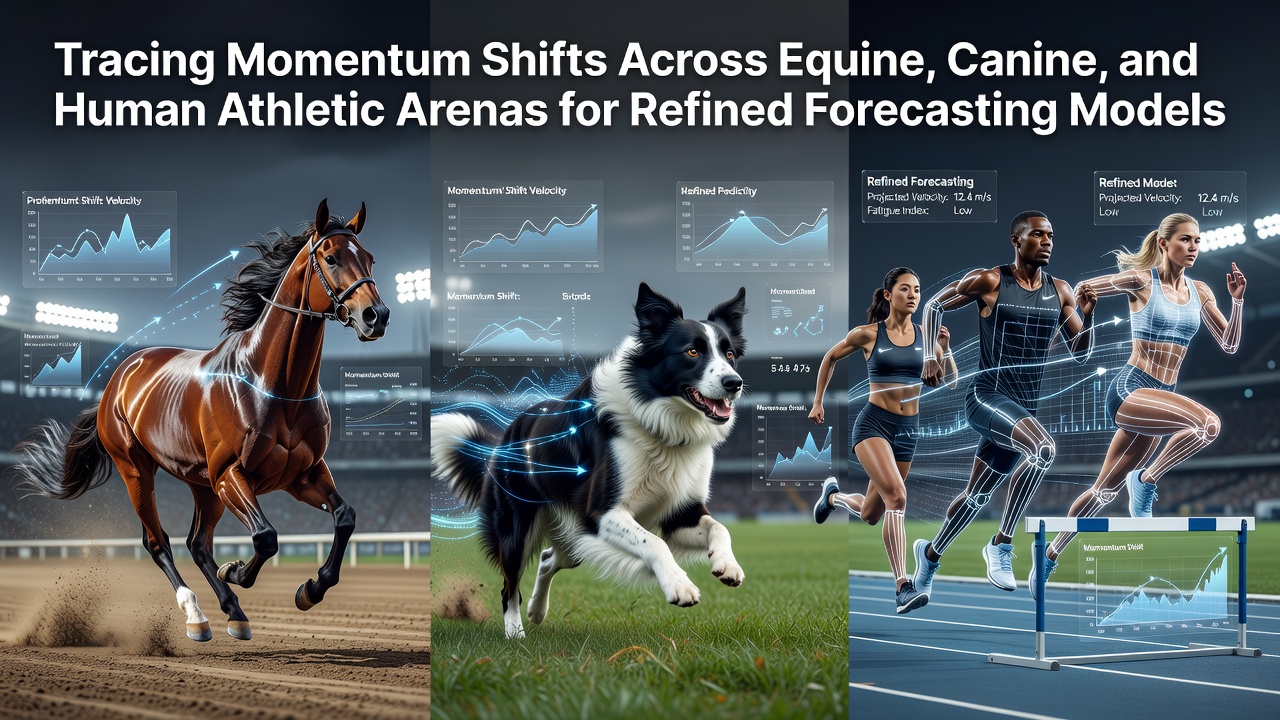
Performance analysts track momentum shifts in equine, canine, and human athletic events to build forecasting models that account for pace changes, fatigue patterns, and recovery phases. Data collected from timed races and competitions reveal consistent sequences where early leaders lose ground after specific distance markers, while mid-race accelerators maintain advantages into the final segments.
Equine Performance Patterns in Racing Circuits
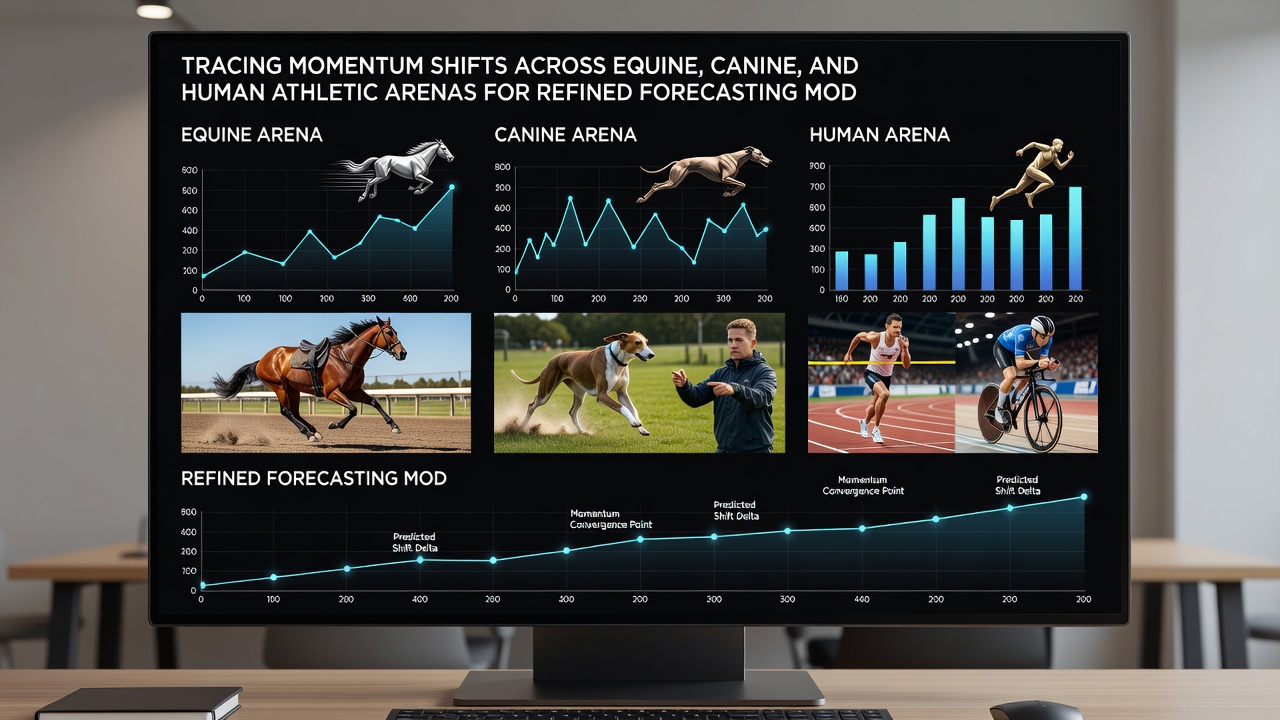
Horse racing records from major tracks show momentum transfers typically begin between the 1200-meter and 1600-meter marks, where stride length adjustments and jockey positioning influence final outcomes. Studies compiled by the Australian Institute of Sport demonstrate that horses carrying forward momentum from the bend maintain higher average speeds over the closing stages compared with those that expend energy in early sprints. Seasonal data from 2025 into 2026 indicate similar patterns across European and North American circuits, with trainers adjusting training regimens to replicate race-day conditions that preserve late-race reserves.
Ground condition variations further modulate these shifts, as firmer surfaces allow quicker recovery between stride cycles whereas softer tracks increase energy cost during acceleration phases. Analysts integrate these variables into multivariate models that assign weighted values to past sectional times, enabling predictions of when a runner will transition from deficit to surplus momentum.
Canine Racing Dynamics and Velocity Changes
Greyhound events present compressed timelines for momentum evaluation because races span shorter distances yet display distinct acceleration and deceleration curves. Performance logs from Australian and Irish tracks highlight that dogs reaching peak velocity between the second and third bends often sustain that advantage through the finish line, whereas early leaders who peak too soon experience measurable slowdowns. Research from sports science departments at several universities has quantified these transitions using high-speed cameras and force-plate measurements, producing datasets that feed directly into forecasting algorithms.
Handlers and trainers monitor heart-rate recovery intervals between trials, noting that animals with shorter rebound times after initial sprints carry momentum more effectively in subsequent outings. August 2026 schedules at several major venues include expanded night racing programs, generating fresh data streams that allow model refinement during periods of higher competition density.
Human Athletic Arenas and Cross-Species Comparisons
Track and field competitions supply granular timing splits that parallel observations from equine and canine events. Elite sprinters and middle-distance runners exhibit momentum shifts around the 200-meter and 600-meter marks respectively, where biomechanical efficiency determines whether an athlete can defend or overtake position. Longitudinal studies published through the National Institutes of Health repository illustrate how lactate threshold timing correlates with late-race acceleration, mirroring patterns documented in racing animals.
Coaches apply these insights when constructing periodized training blocks that deliberately induce controlled fatigue to strengthen recovery mechanisms. Data aggregation across species reveals shared mathematical structures: exponential decay functions fitted to velocity curves produce comparable coefficients once distance is normalized, supporting unified forecasting frameworks that accommodate equine, canine, and human datasets within a single architecture.
Integration into Forecasting Models
Model developers combine sectional timing databases with environmental and physiological covariates to generate probability distributions for future performances. Machine-learning pipelines trained on multi-year archives now incorporate real-time sensor feeds from wearable devices used in human events and implanted monitors trialed in select equine programs. Cross-validation exercises conducted by research teams at institutions in Canada and New Zealand confirm that models incorporating momentum-shift variables reduce prediction error by measurable margins relative to pace-only baselines.
August 2026 competitions will supply additional test cases as international calendars overlap, creating opportunities to evaluate model robustness under simultaneous high-stakes conditions across all three athletic domains.
Conclusion
Tracing momentum shifts supplies a common analytical lens for equine, canine, and human athletic performance, yielding datasets that support increasingly precise forecasting models. Continued collection of standardized timing and physiological metrics across regions will further align these approaches, allowing practitioners to refine predictions as new events unfold.