Weather Patterns and Ground Conditions Shaping Athletic Performance
Written by Carlo Lehmann · Aug 19, 2026
Weather Patterns and Ground Conditions Shaping Athletic Performance
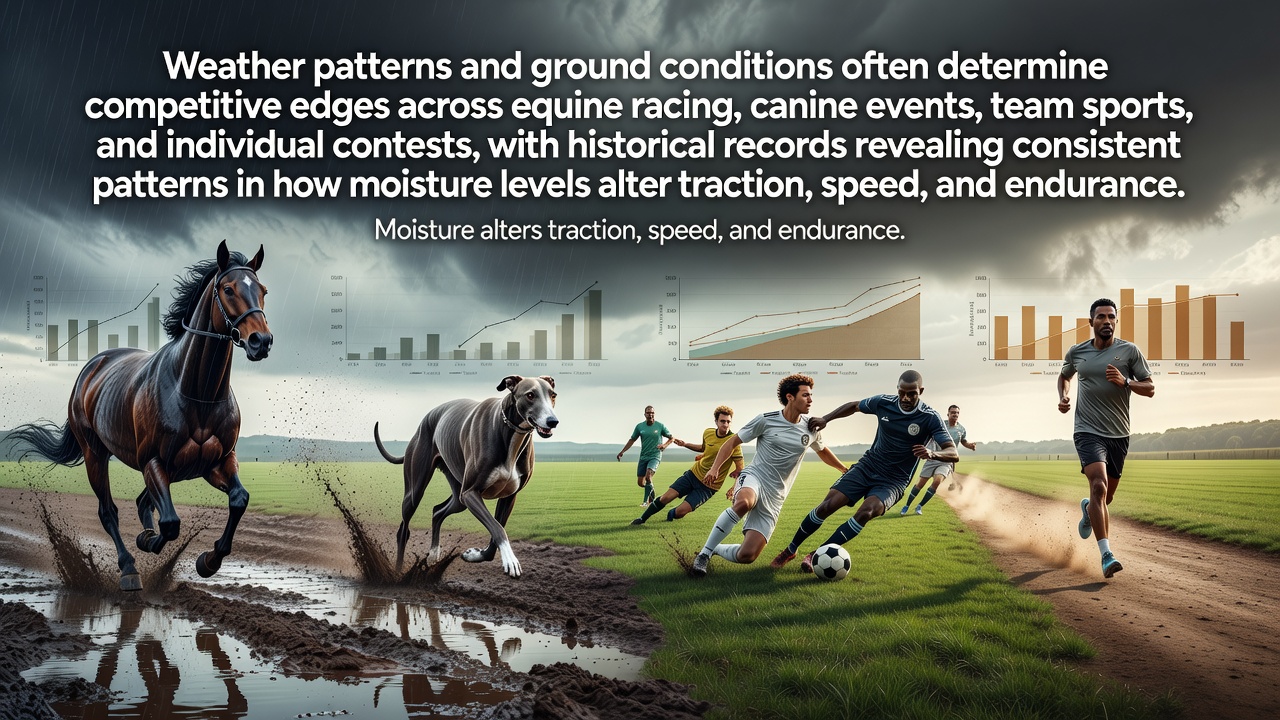
Weather patterns and ground conditions often determine competitive edges across equine racing, canine events, team sports, and individual contests, with historical records revealing consistent patterns in how moisture levels alter traction, speed, and endurance; researchers at institutions like the National Oceanic and Atmospheric Administration have documented these variables through decades of meteorological data that link precipitation amounts to surface changes. Observers note that soil composition interacts with rainfall in ways that modify friction coefficients, which in turn influence how athletes and animals move across fields, tracks, and courses during events held throughout the year including those scheduled for August 2026 when seasonal humidity spikes occur in many regions.
Equine Racing and Surface Variability
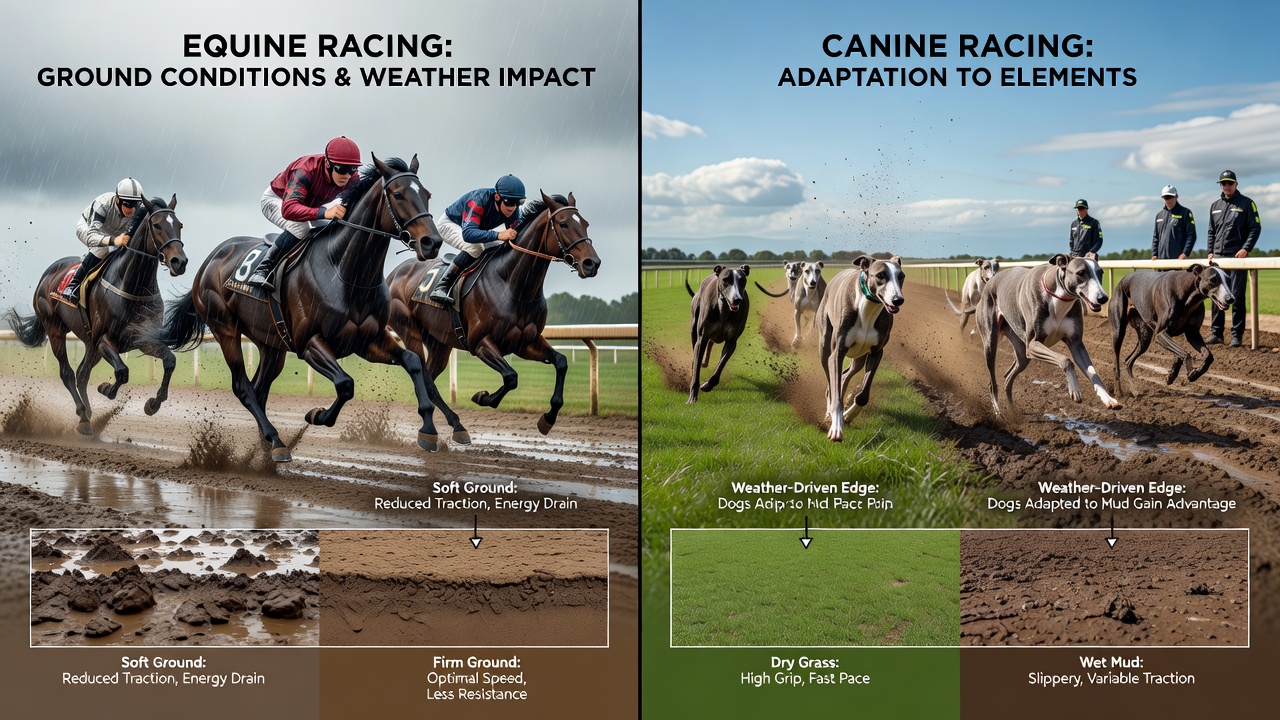
Equine racing provides clear examples of these dynamics because horses depend on hoof grip that shifts dramatically with water content in the track surface, and studies from the Australian Bureau of Meteorology show that heavy rainfall reduces stride length while increasing energy expenditure as animals adjust to softer footing. Trainers and analysts track moisture percentages because a track rated as firm allows higher speeds yet a shift to yielding conditions after overnight showers slows times by measurable margins, with historical data from major circuits confirming that certain horses perform better when the ground holds more water due to their conformation and muscle distribution. Ground staff monitor these changes using penetrometers that quantify hardness levels, and records indicate that races run in dry periods produce faster overall results compared to those affected by prolonged wet spells that compact the soil differently.
Canine Events and Traction Demands
Canine events follow similar principles where dogs in agility trials or greyhound racing encounter altered traction on damp surfaces that affect acceleration and turning radii, while data collected by veterinary research groups demonstrates that wet grass increases slip risk and forces handlers to adjust training regimens accordingly. Moisture penetration into turf layers changes the bounce and grip properties that dogs rely on during jumps and sprints, and patterns from past competitions reveal that breeds with specific paw structures gain advantages in heavier conditions whereas others excel when the ground remains dry and compact. Event organizers schedule adjustments based on forecasts because sudden downpours can transform a standard course into one that demands greater endurance from the animals over repeated runs.
Team Sports and Field Conditions
Team sports such as soccer and rugby experience pronounced effects from weather because player movement across shared pitches depends on how rain saturates the grass and underlying soil, which researchers at Canadian universities have quantified through studies linking precipitation totals to reduced ball roll distances and altered passing accuracy. In August 2026 many leagues anticipate typical late-summer storms that soften fields and thereby favor teams with stronger defensive setups that capitalize on slower play, whereas drier conditions promote faster transitions and higher scoring rates according to aggregated match statistics. Endurance becomes a factor during extended matches when mud accumulates on boots and increases fatigue, and historical comparisons across European and North American leagues show consistent correlations between rainfall events and shifts in possession statistics that teams study to refine strategies.
Individual Contests and Environmental Factors
Individual contests including tennis and track and field events also reflect these influences since athletes must adapt footwork and timing to changing surface responses, and reports from the World Meteorological Organization highlight how localized weather systems create micro-variations in court or track conditions that affect serve speeds or sprint starts. Moisture levels on clay courts slow ball bounce while hard courts retain heat differently after rain, patterns that competitors review through past tournament logs to anticipate advantages in specific weather scenarios. Endurance demands rise in humid conditions because athletes expend more effort maintaining balance on slick areas, and records from multi-day events demonstrate that those who prepare for variable ground firmness often maintain performance levels better than those relying solely on dry-weather training.
Historical Patterns and Data Insights
Historical records compiled over centuries of organized competitions reveal recurring patterns where moisture consistently alters outcomes across disciplines, with analysts cross-referencing weather logs against performance metrics to identify trends such as longer race durations during wet seasons or higher injury rates on softened surfaces. Data from sources including the European Centre for Medium-Range Weather Forecasts indicates that regions experiencing frequent rainfall cycles develop ground profiles that reward certain techniques while penalizing others, and these observations guide preparation protocols used by coaches and participants worldwide. What's interesting is how cumulative effects build over multiple days of events when repeated precipitation prevents full drying and creates layered conditions that demand ongoing adjustments rather than one-time responses.
Conclusion
Weather patterns and ground conditions continue to shape results in equine racing, canine events, team sports, and individual contests through their direct impact on traction, speed, and endurance, as evidenced by extensive historical and meteorological documentation. Participants and organizers rely on accurate forecasts and surface assessments to navigate these variables, and the consistent patterns observed across different climates underscore the importance of environmental awareness in competitive preparation. As August 2026 approaches, ongoing monitoring of seasonal shifts will further illustrate these established relationships in upcoming fixtures.